
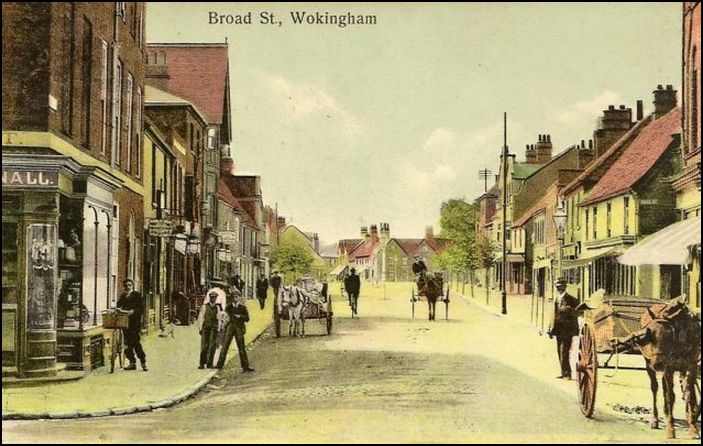
Post cards of normal scenes around town were commonplace and their attraction was the coloured photograph – completed by hand.
Perhaps one had a day out somewhere and one would probably buy two or three picture postcards where one had gone. One would write a short message on the back and write, nice time here—something like that—put a ha’penny stamp on it and send it back to one’s friends and family and so on.
When one went on a fortnight’s holiday to the seaside—on one of those wet afternoons you could go and buy half a dozen picture postcards at a penny each and half dozen ha’penny stamps. So for ninepence you could send half a dozen different messages to friends and relatives. That is what everybody did. It was quite a business. The postcard industry must have been something in those days.
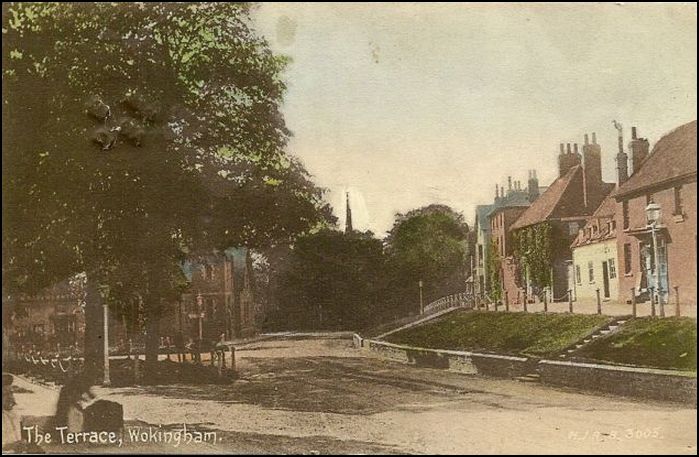
Here is another photograph of the The Terrace, at the end of Broad Street with the colour painted by hand. These are now collectors items
And there was the other end where these postcards came through the letterbox. Today one would probably read them and throw them away. In those days those cards were carefully kept, and in the winter time, it was a pastime to get what was known as a postcard album and to stick these postcards in. There were slots in all the pages to put the corners of the postcards in and compile an album of all the cards you received and I remember that was quite a pastime and an interesting one at that. My grandfather had three of these albums, and as a small boy, it was quite a joy to me on occasions to get one or other of them down and go through, look at the postcards, see where they came from and it kept me amused. That was the result of people being able to write and also the penny post which enabled them to keep in touch.